How a Tourbillon Works
Breguet's spinning cage, explained simply. A tourbillon puts a watch's balance and escapement in a rotating cage. How it works, why Breguet invented it in 1801 and why it costs so much.
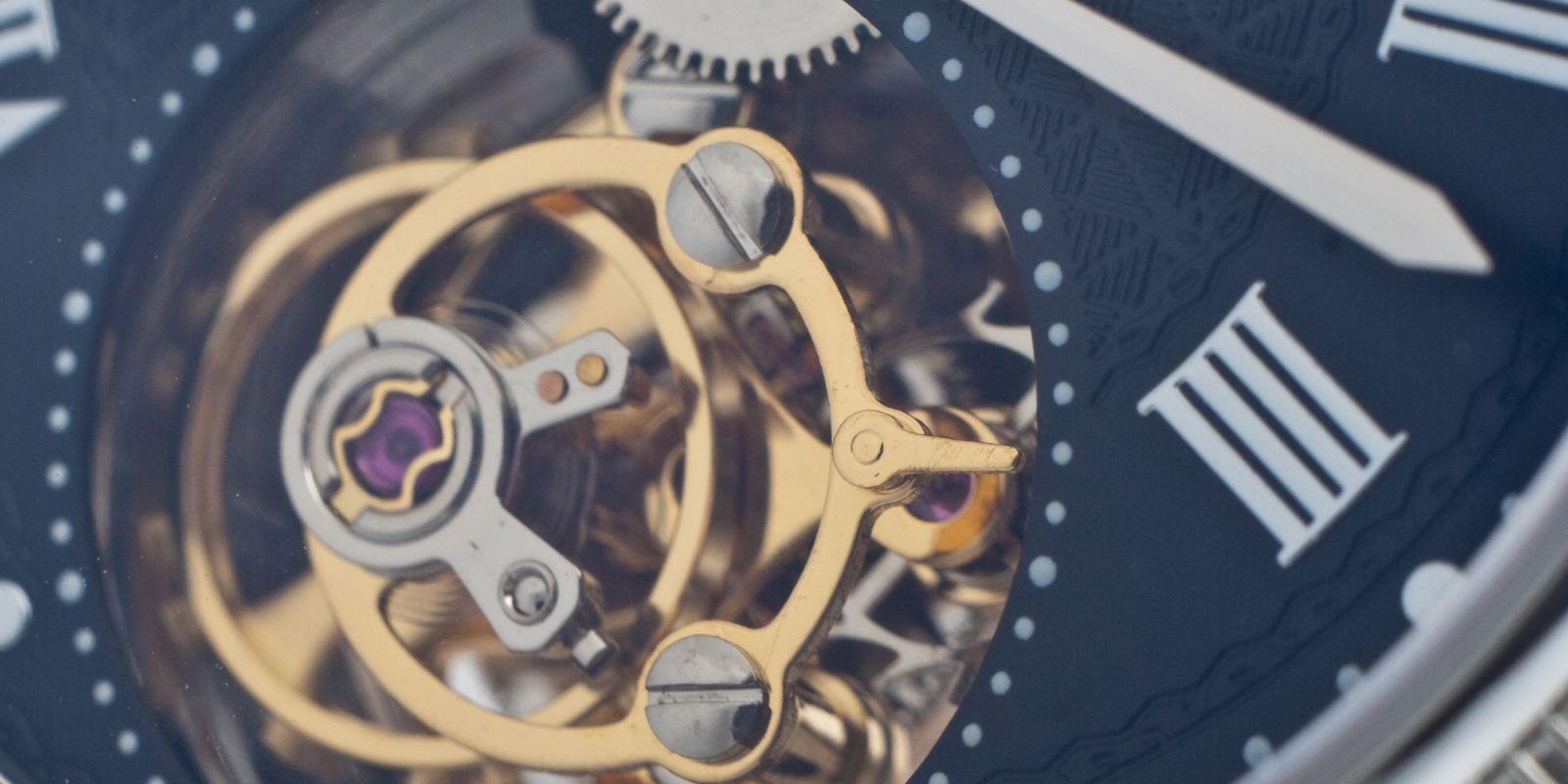
A tourbillon cage close up: Guy Sie from Utrecht, Netherlands, CC BY-SA 2.0
The problem it solves
A mechanical watch keeps time with a balance wheel that swings back and forth, controlled by a fine spring. The escapement lets the watch's gears move forward a tiny step with each swing. If the balance is even slightly heavier on one side, gravity pulls on that spot and the watch runs a little fast or slow.
In a pocket watch that spends hours upright in a waistcoat, that error stays in the same direction. Watchmakers call these positional errors. In the late 1700s, they were one of the main limits on accuracy.
Breguet's idea
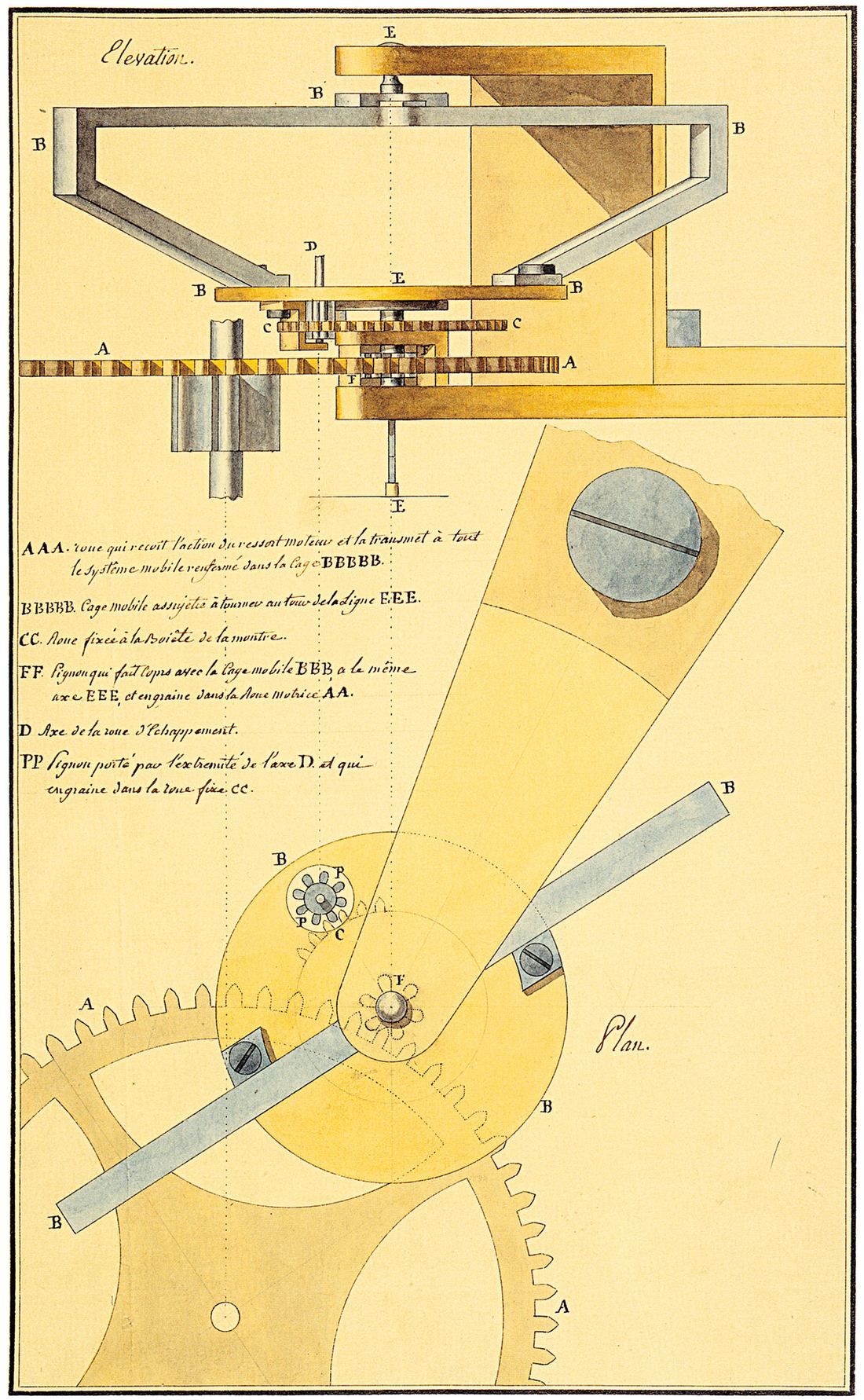
Abraham-Louis Breguet, a Swiss-born watchmaker working in Paris, came up with an answer. He mounted the balance wheel and escapement inside a small rotating cage, the tourbillon, which means whirlwind in French. He patented it on 26 June 1801.
Because the cage keeps turning, usually once a minute, any heavy spot on the balance is pulled by gravity in every direction in turn. The errors tend to cancel out over each rotation. The idea had roots in work by his friend, the English watchmaker John Arnold.
Variations on the theme
In a classic tourbillon the cage is held by a bridge above and below. In 1920 Alfred Helwig, a teacher at the German watchmaking school in Glashütte, designed the flying tourbillon, which is supported from one side only so the cage seems to float.
Later makers went further. Anthony Randall invented a double-axis tourbillon in 1977, and modern houses build multi-axis and fast-turning designs, such as Greubel Forsey's tourbillon that turns once every 24 seconds. Many tourbillons that rotate once a minute also act as a small seconds hand.
Why tourbillons are so expensive
A tourbillon cage can weigh less than a gram yet contain dozens of parts, and it must be perfectly balanced itself or it causes the errors it is meant to remove. Making and adjusting one takes a skilled watchmaker a long time, which is why fewer than a thousand are believed to have been made between 1801 and 1945.
In a wristwatch that moves with the arm, the original accuracy benefit is smaller than in a pocket watch, and modern materials help too. Today the tourbillon is prized mainly as a display of craftsmanship, often shown through an opening in the dial so the owner can watch it turn.
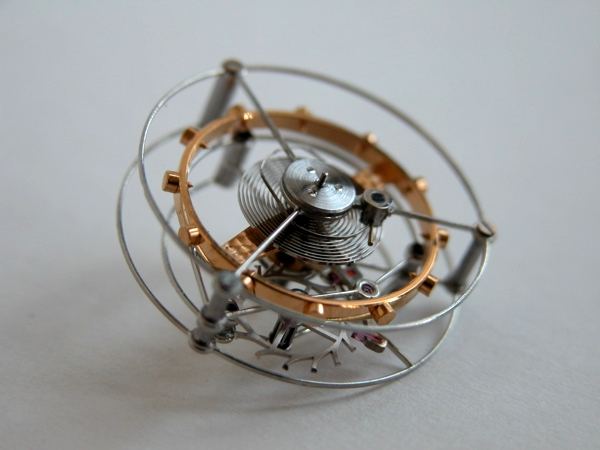
- A tourbillon cage close up: Guy Sie from Utrecht, Netherlands, CC BY-SA 2.0
- Breguet's tourbillon drawing: Abraham-Louis Breguet, Public domain
- A tourbillon cage: Simon Schaller (Benutzer: simusch, eigenes Bild), Public domain
Text written by Greatest Prestige.