Bugatti Chiron and the 300 mph Run
1,500 horsepower and a speed milestone. The Bugatti Chiron has a 1,500 PS quad-turbo W16. How it was built, the 304.773 mph run in 2019 and how it followed the Veyron.
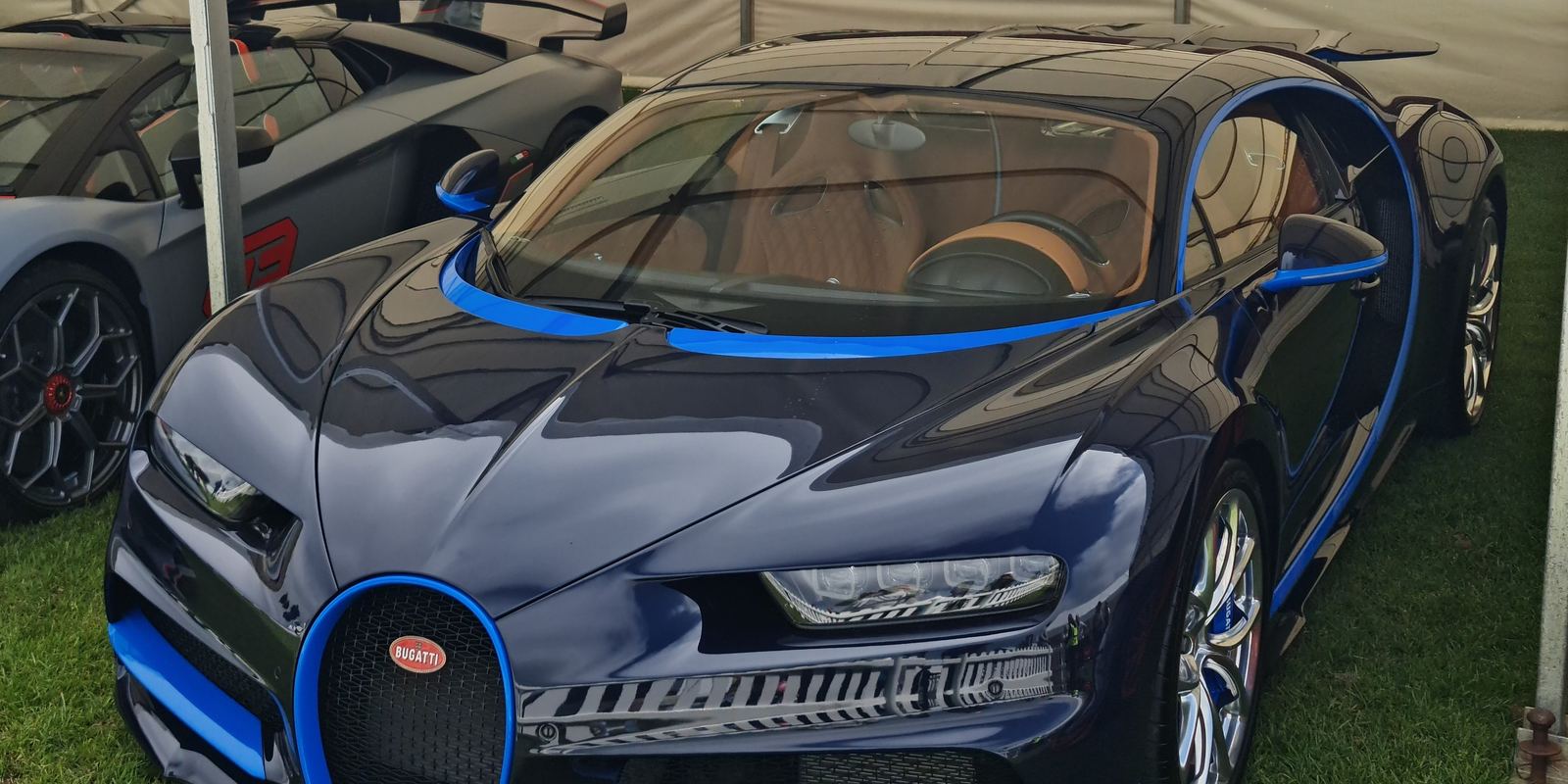
A Bugatti Chiron: MrWalkr, CC BY-SA 4.0
The Veyron first
Bugatti, revived under the Volkswagen Group, began building the Veyron 16.4 in Molsheim, France, in 2005. Its 8.0 litre W16 engine, effectively two narrow V8s joined together and fed by four turbochargers, made 1,001 PS, and the car reached 407 km/h. The later Veyron Super Sport was timed at 431.072 km/h in 2010.
The Veyron also showed the cost of extreme speed. Its special Michelin tyres were designed for the car's top speed, and replacing them was famously expensive.
The Chiron arrives
The Chiron, named after the Bugatti racing driver Louis Chiron, was unveiled at the Geneva Motor Show on 1 March 2016. It kept a heavily updated version of the W16, now producing 1,500 PS and 1,600 Nm of torque, inside a carbon fibre structure with all-wheel drive.
Its top speed is electronically limited to 420 km/h for road use. Bugatti said the main limit was the tyres, because no road tyre then available could be guaranteed at the speed the car could otherwise reach.
Breaking 300 mph
In August 2019 Bugatti took a modified, pre-production Chiron Super Sport 300+ to the Ehra-Lessien test track in Germany, which has a straight about nine kilometres long. With racing driver Andy Wallace at the wheel it reached 490.484 km/h, or 304.773 mph, the first time a near-production road car had passed 300 mph.
The run was made in one direction only, so it was not a two-way average as some record rules require. Bugatti later built 30 production Super Sport 300+ cars with the same long-tail body and orange stripes.
How the Chiron was built
Each Chiron was assembled largely by hand in Bugatti's atelier in Molsheim, close to where Ettore Bugatti founded the company in 1909. The engine alone has 16 cylinders, four turbos and a complex cooling system with multiple radiators.
Bugatti set production at 500 cars across all Chiron versions and completed the last one in 2024. Its successor, the Tourbillon, uses a V16 engine combined with electric motors.
Building a car like this is closer to assembling an aircraft than a normal car. Parts arrive from specialist suppliers, and small teams fit the engine, gearbox and body by hand before every car is driven on a test track and then on public roads. Painting and finishing the carbon fibre body can take weeks, and many owners choose their own colours and trim.
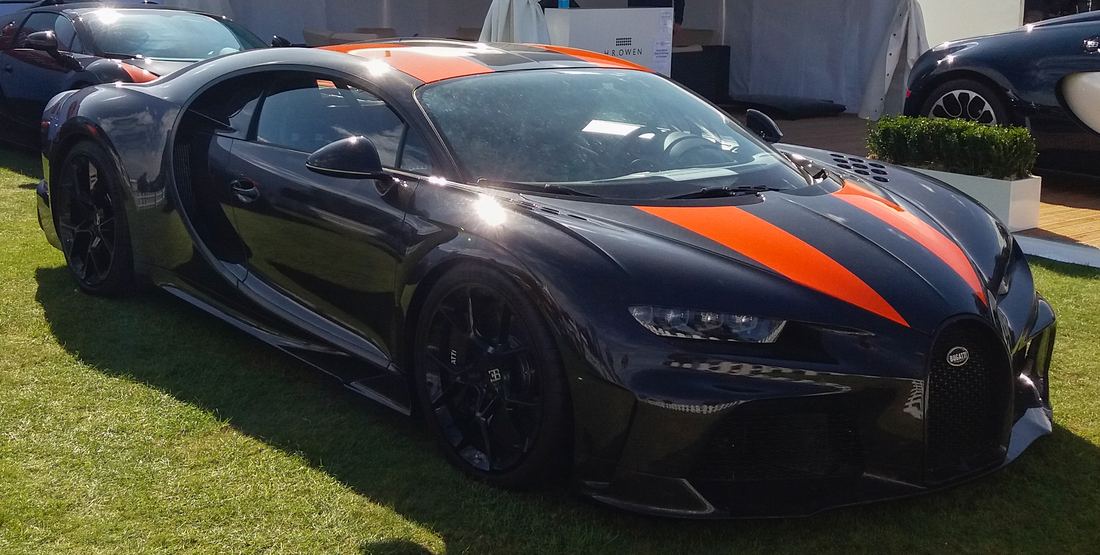
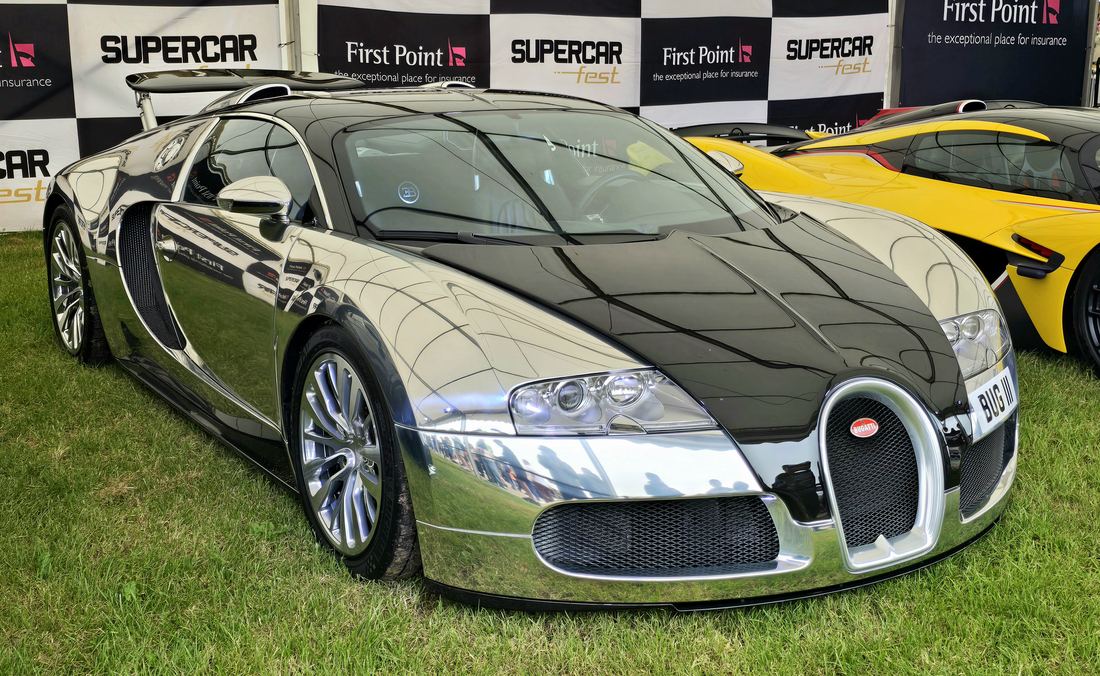
- A Bugatti Chiron: MrWalkr, CC BY-SA 4.0
- Chiron Super Sport 300+: Dylan Johnson, CC BY-SA 4.0
- The Veyron 16.4 that came before: Calreyn88, CC BY-SA 4.0
Text written by Greatest Prestige.